Every year, millions of tonnes of fish waste are discarded along Kenya’s coastline, creating environmental pollution and economic loss. At SeaVentures, we’ve developed an innovative process that transforms this “waste” into valuable, high-protein animal feeds. Here’s exactly how we do it.
The Problem: Fish Waste in Coastal Kenya
Kenya’s fishing industry generates approximately 60-70% waste from every catch:
- Fish heads, bones, and viscera
- Processing by-products
- Unmarketable fish parts
- Spoiled or damaged fish
Traditionally, this waste is:
- Dumped into the ocean (creating pollution)
- Buried on beaches (attracting pests)
- Left to decompose (health hazards)
- Simply discarded (economic waste)
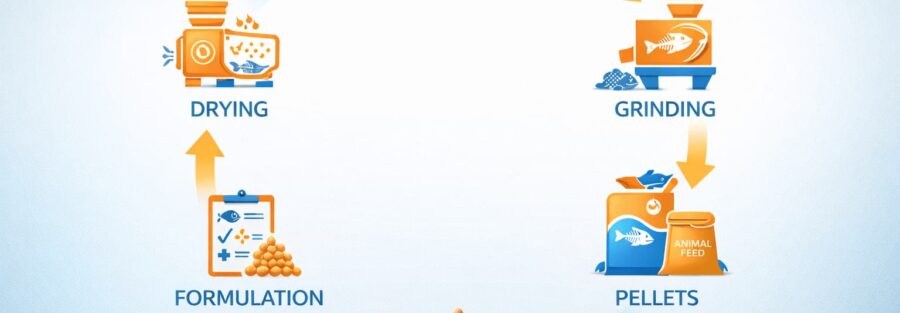
The Solution: Our 6-Step Process
Step 1: Raw Material Sourcing
We partner with:
- Fishermen for by-catch and processing waste
- Beach Management Units (BMUs) for community coordination
- Fish processors for industrial waste streams
- Women fish traders for collection and aggregation
Our sourcing network ensures:
- Consistent quality raw materials
- Fair prices for community suppliers
- Fresh waste collection (within 12 hours of catch)
- Traceability and safety standards
Step 2: Drying and Sanitization
Once collected, fish waste undergoes:
- Initial washing to remove contaminants
- Salt removal (if present)
- Solar or mechanical drying to 10-12% moisture
- Temperature-controlled sanitization (kills pathogens)
- Quality inspection
This step is crucial for:
- Food safety
- Preventing spoilage
- Reducing microbial load
- Concentrating nutrients
Step 3: Crushing and Grinding
Dried fish waste is processed through:
- Primary crushing (reduces size)
- Fine grinding (creates uniform particle size)
- Sieving (removes any contaminants)
- Particle size optimization (based on feed type)
Different animal feeds require different particle sizes:
- Poultry: 2-3mm
- Fish: 1-5mm (depending on fish size)
- Pigs: 3-5mm
- Pets: 2-4mm
Step 4: Nutrient Optimization & Formulation
Our nutritionists create balanced formulations by:
- Testing protein content (targeting 40-60%)
- Adding complementary ingredients (grains, minerals, vitamins)
- Balancing amino acid profiles
- Including natural preservatives
- Creating species-specific recipes
Each batch is tested for:
- Crude protein (%)
- Fat content
- Moisture levels
- Mineral composition
- Digestibility
Step 5: Pelletisation and Packaging
The formulated feed mixture is:
- Steam-conditioned (improves binding)
- Pressed through pelleting machines
- Cooled and dried
- Screened for size uniformity
- Packaged in food-grade bags (5kg, 10kg, 25kg, 50kg)
Benefits of pelletisation:
- Reduces waste during feeding
- Improves digestibility
- Easier handling and storage
- Better portion control
- Longer shelf life
Step 6: Quality Testing & Certification
Before reaching customers, every batch undergoes:
- Laboratory analysis (nutrient profiles)
- Microbiological testing (safety verification)
- Physical quality checks (pellet durability)
- Partnership verification with research institutions
- KEBS compliance documentation
Our Production Capacity
Currently, SeaVentures produces:
- Approximately 6 tonnes per month
- Serving 100+ farmers across Kenya
- Processing waste from 50+ fishermen and traders
- Preventing 10+ tonnes of ocean pollution monthly
Environmental Impact
Our process delivers measurable environmental benefits:
- 60-70% waste reduction from fishing operations
- Zero ocean dumping of collected waste
- Lower carbon footprint compared to conventional feeds
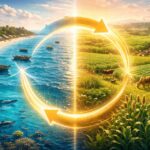
- Circular economy model supporting coastal communities
Quality Assurance
We maintain strict quality through:
- Partnership with KALRO (Kenya Agricultural and Livestock Research Organization)
- Collaboration with KMFRI (Kenya Marine and Fisheries Research Institute)
- Working toward KEBS (Kenya Bureau of Standards) certification
- Regular third-party testing
- Customer feedback integration
Innovation & Research
We continuously improve through:
- Nutritional research partnerships
- Feed trial programs with farmers
- Process optimization studies
- New product development (organic fertilizers coming soon)
Transparency Commitment
Customers can:
- Visit our production facility
- Meet our sourcing partners
- Review test results
- Trace raw material origins
- Understand our complete process
Conclusion
Fish waste isn’t waste—it’s a valuable resource. Through our systematic, scientifically-backed process, SeaVentures transforms what was once pollution into premium nutrition. Every bag of Zuri Feeds represents cleaner oceans, empowered communities, and healthier livestock.