
Introduction
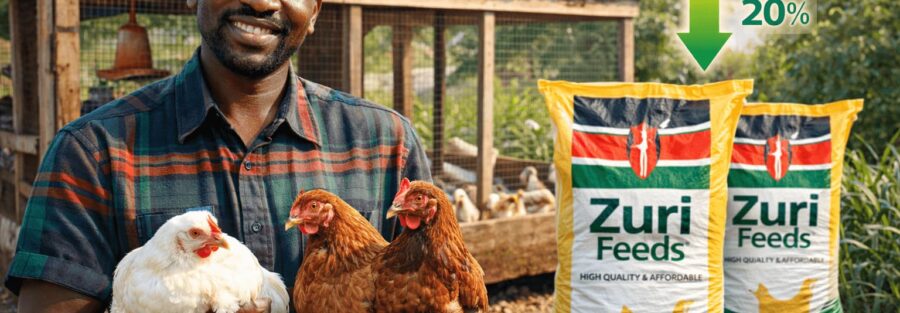
Feed costs represent 60-70% of total poultry production expenses for most Kenyan farmers. With rising prices for maize and soybean meal, profit margins are shrinking. But what if you could reduce costs by 20% while actually improving production? Here’s how.
Understanding the Feed Cost Crisis
Current Market Reality (2026):
- Maize: KES 4,500-5,500 per 90kg bag (up 40% from 2023)
- Soybean meal: KES 6,000-7,500 per 50kg bag (up 35%)
- Commercial feed: KES 3,500-4,200 per 50kg bag
- Profit margins: Down to 15-20% (from 30-35% in 2020)
Why Costs Keep Rising:
- Climate change affecting maize yields
- Import dependence for soybean meal (70% imported)
- Currency fluctuations increasing import costs
- Middleman markups
- Transportation expenses
The Impact on Farmers:
- Smaller farms going out of business
- Reduced flock sizes
- Lower investment in farm improvements
- Financial stress and debt
Strategy 1: Switch to High-Efficiency Feeds
The Math: Traditional feed conversion ratio: 2.5:1 (2.5kg feed for 1kg weight gain) High-efficiency feed (like Zuri): 2.0:1
Example Calculation (100 broilers to 2kg market weight):
- Traditional: 100 birds × 2kg × 2.5 = 500kg feed needed
- High-efficiency: 100 birds × 2kg × 2.0 = 400kg feed needed
- Savings: 100kg feed = KES 7,000-8,400 saved
Why Fish-Based Protein Improves Efficiency:
- Higher digestibility (85-95% vs 75-80% for soy)
- Complete amino acid profile (less waste)
- Better nutrient absorption
- Improved gut health
Strategy 2: Optimize Feed Formulation
Protein Requirements by Stage:
- Chicks (0-8 weeks): 20-22% protein
- Growers (8-18 weeks): 16-18% protein
- Layers (18+ weeks): 16-18% protein
- Broilers (all stages): 20-23% protein
Common Mistake: Using one feed type for all stages = 15-20% unnecessary cost
Solution:
- Stage-appropriate feeding
- Supplement with fish protein during critical growth phases
- Reduce protein in later stages when growth slows
Strategy 3: Reduce Feed Waste
Hidden Feed Losses:
- Spillage from poor feeders: 5-10% of feed
- Spoilage from moisture: 3-5%
- Rodent/pest consumption: 2-5%
- Total potential waste: 10-20% of feed costs!
Solutions:
- Upgrade to anti-waste feeders (ROI in 3-6 months)
- Store feed in dry, sealed containers
- Implement rodent control program
- Use pelletized feed (reduces spillage by 50%)
Calculation: If you spend KES 100,000/month on feed:
- 10% waste = KES 10,000 lost
- Annual waste = KES 120,000
- Investment in proper feeders: KES 30,000
- Payback period: 3 months
Strategy 4: Improve Feed Conversion Through Health
Disease costs money:
- Sick birds eat more, grow slower
- Treatments are expensive
- Mortality reduces output
- Weak birds produce lower-quality products
Fish-Based Protein Benefits:
- Omega-3 fatty acids boost immunity
- Better gut health
- Stronger birds resist disease
- Reduced veterinary costs
Case Study: Farmer in Kiambu switched to Zuri Poultry Feed:
- Previous mortality: 8% per batch
- New mortality: 4% per batch
- Veterinary costs dropped 40%
- Savings: KES 15,000 per 500-bird batch
Strategy 5: Source Directly & Buy in Bulk
Middleman Markup Reality:
- Retailer adds: 15-20%
- Distributor adds: 10-15%
- Total markup: 25-35%
Direct Sourcing Options:
- Buy directly from manufacturers (like SeaVentures)
- Join farmer cooperative buying groups
- Purchase in bulk (1-3 month supply)
Bulk Pricing Example (Zuri Feeds):
- 1 bag (50kg): KES 3,500
- 10 bags: KES 3,300 per bag (6% discount)
- 20+ bags: KES 3,100 per bag (11% discount)
For 100 layers (eating 12kg/day):
- Monthly feed: 360kg (7.2 bags)
- Buying 20 bags (3-month supply):
- Regular price: 7.2 × 3 × KES 3,500 = KES 75,600
- Bulk price: 22 × KES 3,100 = KES 68,200
- Savings: KES 7,400 every 3 months
Strategy 6: Supplement Strategically
Don’t Over-Supplement: Many farmers waste money on unnecessary supplements
Actually Needed:
- Calcium (for layers): KES 500/month
- Grit: KES 300/month
- Vitamins during stress: KES 400/month
Usually Unnecessary (if using quality feed):
- Amino acid boosters (already in fish protein)
- Growth promoters (health does this naturally)
- Expensive probiotics (good feed has these)
Savings: KES 2,000-3,000/month
Strategy 7: The Zuri Feeds Advantage
Why Zuri Feeds Saves Money:
1. Superior Feed Conversion:
- Average: 2.0:1 (vs industry 2.5:1)
- Saves 20% feed per kg of meat/eggs
2. Better Bird Health:
- Lower mortality rates
- Reduced medication costs
- Fewer production losses
3. Competitive Pricing:
- Local production = no import costs
- Direct sales = no middleman markup
- Bulk discounts available
4. Higher Product Quality:
- Eggs with richer yolk color (premium pricing)
- Better meat flavor (customer loyalty)
- Stronger shells (less breakage/waste)
Real Farmer Results:
Case Study 1: Nakuru Layer Farm (500 birds)
- Previous feed cost: KES 45,000/month
- With Zuri Feeds: KES 36,000/month
- Savings: KES 9,000/month = KES 108,000/year
- Plus: Egg production increased 12%
Case Study 2: Kiambu Broiler Farm (1,000 birds/batch)
- Previous cost per bird: KES 420
- With Zuri: KES 340
- Savings per batch: KES 80,000
- Plus: Faster time to market (5 weeks vs 6 weeks)
Case Study 3: Kajiado Small-holder (100 layers)
- Monthly feed cost before: KES 12,500
- After switching: KES 10,200
- Annual savings: KES 27,600
- ROI on switching: 1 month
Complete Cost Reduction Plan
Month 1: Assessment
- Calculate current feed conversion ratio
- Measure waste percentage
- Identify health issues
- Research feed alternatives
Month 2: Implementation
- Switch to Zuri Feeds (start with 20% blend)
- Upgrade feeders
- Improve storage
- Implement rodent control
Month 3: Optimization
- Increase Zuri Feeds to 100%
- Fine-tune feeding schedule
- Monitor results
- Adjust as needed
Month 4+: Savings Realized
- Track cost reductions
- Monitor production improvements
- Reinvest savings in farm growth
Expected Results:
Conservative Estimate:
- Feed cost reduction: 15-20%
- Improved production: 8-12%
- Lower mortality: 2-4%
- Total profit improvement: 25-35%
Example (500-layer farm):
- Current monthly profit: KES 35,000
- After optimization: KES 45,500
- Additional annual income: KES 126,000
Getting Started with Zuri Feeds
Trial Program:
- Start with one batch/flock
- Use 20-30% Zuri + 70-80% current feed
- Track feed consumption, growth, health
- Gradually increase to 100% over 3 weeks
- Compare results
Support Provided:
- Free feeding consultation
- Performance tracking templates
- WhatsApp support group for farmers
- Farm visits (for larger orders)
Conclusion
Reducing feed costs doesn’t mean compromising quality. By making smart choices—efficient feeds, waste reduction, direct sourcing, and strategic supplementation—Kenyan poultry farmers can significantly improve profitability.
Zuri Feeds offers a proven solution: locally produced, competitively priced, high-efficiency feed that delivers real savings and better results.